
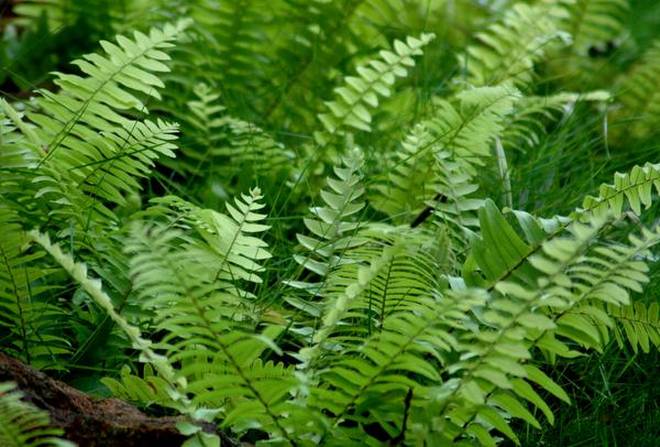
India’s largest open-air fernery inaugurated in Uttarakhand
- The fernery is home to a large number of fern species, some of which are endemic to the state, some hold medicinal value while some are threatened species.
- The fernery has the largest collection of fern species, second to only Jawaharlal Nehru Tropical Botanical Garden and Research Institute (TBGRI), Thiruvananthapuram.
- However, it is the country’s first open-air fernery in natural surroundings which is not under any poly-house/ shade house.
Ranikhet fernery
- The fernery spreads over four acres of land at an altitude of 1,800 metres.
- It has been developed by the Research Wing of Uttarakhand Forest Department over a period of three years, under Central Government’s CAMPA scheme.
- CAMPA or Compensatory Afforestation Funds Management and Planning Authority (CAMPA) by the Ministry of Environment and Forests (MoEF) was introduced in 2004 to accelerate activities for the preservation of natural forests, management of wildlife, infrastructure development in forests, and other allied works.
Species in Fernery
- The Ranikhet fernery has 120 different types of fern.
- The fernery has a mix of species from the western Himalayan region, the eastern Himalayan region, and the Western Ghats.
- It houses several rare species, including Tree Fern, a threatened species by the State Biodiversity Board of Uttarakhand.
- It also houses around 30 species of medicinal ferns such as Hansraj, which has huge importance in Ayurveda as a remedy for ailments.
- Further, there are edible fern species like Lingura, a popular nutritious food item in Uttarakhand.
Ferns
- Ferns are non-flowering pteridophytes which generally reproduce by producing spores.
- However, similar to flowering plants, ferns have roots, stems, and leaves.
- Ferns are the first plant with a fully developed vascular system.
- About 9% of the world’s Pteridophytes occur in India or only in 2.5% landmass of the world.
- Ferns and Fern-allies are the second largest group of plants in Indian flora and are represented by 33 families 130 genera and 1,267 species.
- 70 species among these are endemic to India.
- Ferns are important for the environment for their ornamental values.
- They have medicinal and edible purposes.
- They are also used to filter heavy metals from polluted waters and are a bioindicator for the health of an ecosystem.