
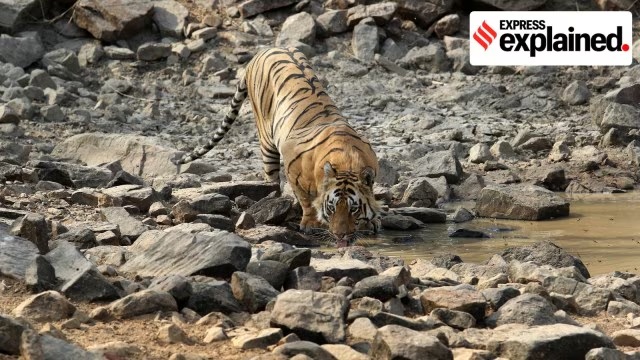
Maharashtra to translocate tigers to Sahyadri reserve: Role of wildlife corridors in tiger conservation
- To revive the population of tigers in Sahyadri Tiger Reserve (STR)- the lone tiger reserve in the Maharashtra western region - the state’s forest department will soon translocate tigers from Tadoba-Andhari Tiger Reserve (TATR) in Chandrapur district.
Key highlights
- However, the objective of the project can only be achieved if the Sahyadri-Konkan wildlife corridor - forests in STR, Goa, and Karnataka serve as the corridor
- Is secure enough and free from human disturbances, according to the experts.
- The tiger population in the region has been historically low due to poaching, poor prey base, and changing habitat.
- One way the population can increase is through the inflow of tigers from the forests, located towards the south of STR, in Goa and Karnataka, especially with the strengthening of the wildlife corridor.
- As a result, the translocation of tigers has been opted for short-term outcomes.
Is translocation the best approach for tiger recovery?
- There have also been failures and shelving of reintroduction plans, like in the case of Satkosia Tiger Reserve in Odisha, which was the country’s first inter-state translocation project.
- Tiger corridors are crucial for the long-term and sustainable success of a translocation project,
What role do wildlife corridors play in conservation?
- Corridors are essentially habitats and pathways that connect wildlife populations, which are fragmented by human settlements and infrastructure works.
- They are crucial for the long-term survival of the tiger population as they help guard against localised extinctions and ensure the exchange of gene flow, which helps in population diversity.
What is the importance of the Sahyadri-Konkan corridor?
- The Sahyadri-Konkan corridor or the Sahyadri-Radhanagari-Goa-Karnataka corridor is crucial for the long-term survival of tiger populations in northern Western Ghats.
- This corridor connects the source population area in Kali Tiger Reserve in Karnataka to the forests in Goa’s hinterland
- Which in turn provides tigers connectivity to Radhanagari Wildlife Sanctuary, conservation reserves in Sindhudurg district and STR.
- The high occurrence of human-dominated settlements and development activities fragments this corridor at several locations, posing a threat to tiger movement and raising the chances of man-animal conflict.
Conclusion
- corridors are not only important for wildlife but also for the water security of communities living around these forests in Goa and Karnataka.
- This is an important watershed area.
- Better coordination between Maharashtra, Goa, and Karnataka to manage this issue is need of an hour