
NASA Selects Gamma-ray Telescope to Chart Milky Way Evolution
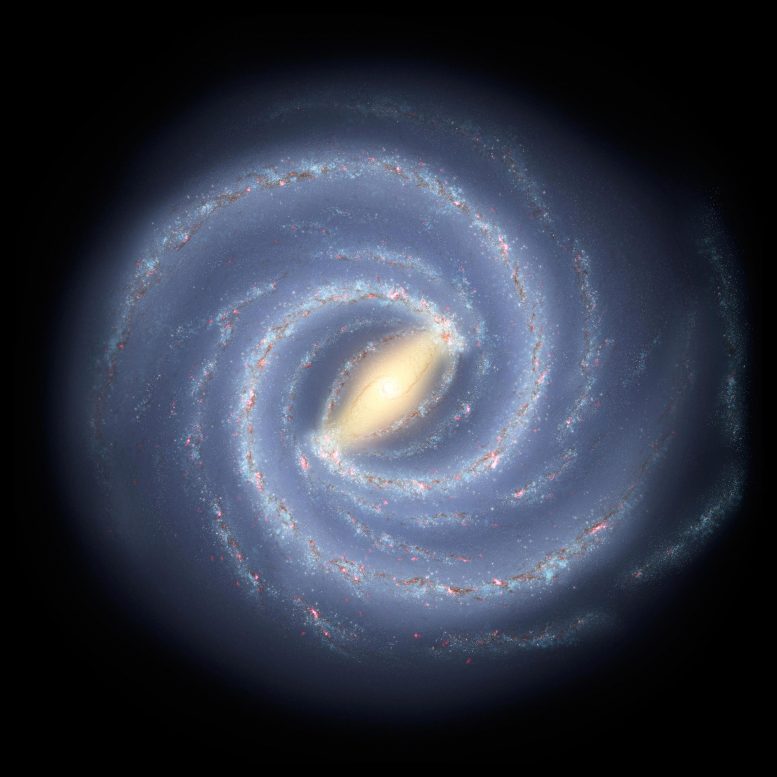
- NASA has selected a new space telescope proposal that will study the recent history of star birth, star death, and the formation of chemical elements in the Milky Way.
- The gamma-ray telescope, called the Compton Spectrometer and Imager (COSI), is expected to launch in 2025 as NASA’s latest small astrophysics mission.
- NASA’s Astrophysics Explorers Program received 18 telescope proposals in 2019 from which NASA selected COSI for concept studies.
About Astrophysics Explorers programme
- NASA’s Explorers Program is the agency’s oldest continuous program.
- It provides frequent, low-cost access to space using principal investigator-led space research relevant to the astrophysics and heliophysics programs.
- Since the 1958 launch of Explorer 1, which discovered Earth’s radiation belts, the program has launched more than 90 missions.
Purpose of Compton Spectrometer and Imager (COSI)
- COSI will study gamma rays from radioactive atoms produced when massive stars exploded to map where chemical elements were formed in the Milky Way.
- The mission will also probe the mysterious origin of our galaxy’s positrons, also known as antielectrons – subatomic particles that have the same mass as an electron but a positive charge.