
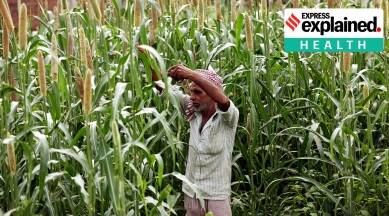
India's big millets push, why it makes sense to have these grains
- The Union Budget has accorded high priority to millets grains such as jowar, bajra, ragi citing their health benefits.
India’s millets push
- Two years ago, the UN General Assembly adopted India’s resolution to declare 2023 as the International Year of Millets.
- Through the year, several central ministries and government organisations will work towards promoting this “nutri cereal”.
- Delegates at G20 meetings will be given a “millet experience” through tasting, meeting farmers, and interactive sessions.
- Union Health Minister has said that food regulator Food Safety and Standards Association of India (FSSAI) will formulate guidelines to include millets in the food menu of schools, hospitals, and government canteens.
- The government also intends to increase procurement of these grains under the public distribution system.
Where are millets produced (and consumed)?
- Jowar is mainly grown in Maharashtra, Karnataka, Rajasthan, Tamil Nadu, Andhra Pradesh, Uttar Pradesh, Telangana, and Madhya Pradesh.
- In 2020-21, the area under jowar stood at 4.24 million hectares, while production was 4.78 million tonnes.
- Maharashtra accounted for the largest area (1.94 mn ha) and production (1.76 million tonnes) of jowar during 2020-21.
- Bajra is mainly grown in Rajasthan, Uttar Pradesh, Haryana, Gujarat, Madhya Pradesh, Maharashtra and Karnataka.
- The state also produced the most bajra in the country (4.53 million tonnes of the total 10.86 million tonnes) in 2020-21.
- The consumption of millets was reported mainly from these states: Gujarat (jowar and bajra), Karnataka (jowar and ragi), Maharashtra (jowar and bajra), Rajasthan (bajra), and Uttarakhand (ragi).
MSP for millets
- The government declares a Minimum Support Price (MSP) for jowar, bajra, and ragi only.
- For KMS 2022-23, the MSP for jowar hybrid was declared at Rs 2,970 per quintal, and that for jowar maldandi at Rs 2,990 per quintal.
- The MSP for bajra and ragi were Rs 2,350 per quintal and Rs 3,578 per quintal respectively
Benefits of millets
- Millets are both eco-friendly and healthier than more commonly consumed grains.
- They require much less water than rice or wheat, and can be grown in rain-fed areas without irrigation.
- Millets tend to be more tolerant to drought and extreme weather, and can grow in poor soil and in hilly areas.
- Millets can be a healthier option to keep lifestyle diseases such as obesity and diabetes at bay.
- Millets have a much lower glycaemic index a measure of how much blood sugar levels spike after consuming a food item — than processed rice or wheat.
- A low glycaemic diet can help in controlling weight and blood sugar levels, consequently reducing the risk of heart disease or even cancers.
- Millets are also high in fibre content that is known to improve gut microbiota.
- They are rich in micronutrients such as iron and zinc, which can help reduce the country’s burden of anaemia.
- Millets also contain niacin, which is linked to lowering triglycerides and increasing HDL or good cholesterol.
- Millets contain no gluten and suit people with gluten allergy and irritable bowel syndrome.
Could you overdo millets?
- Millet grains should not be polished or processed like rice or wheat — doing so will raise their glycaemic index, and benefits will be lost.
Conclusion
- It is the right step of government for the sustainable agriculture production along with it will help in fight against poverty, malnutrition and increase in income of farmer.